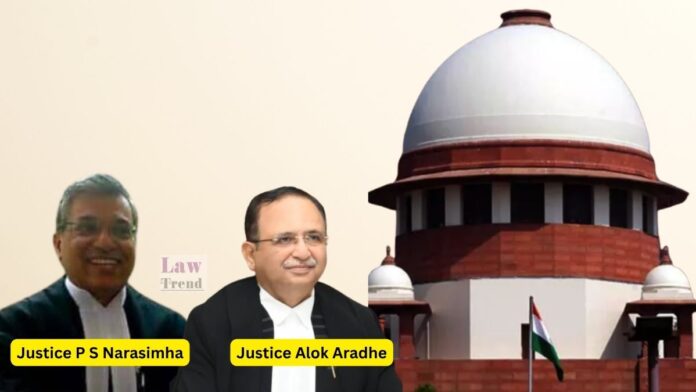
Supreme Court on Tender Matters: Why Courts Must Exercise Restraint in Contract Decisions

In a significant ruling, the Supreme Court of India has once again emphasized that courts must exercise restraint in matters relating to government tenders and contracts.
The judgment came while setting aside an order of the High Court that had interfered with the award of a contract (Letter of Award – LOA), reinforcing the principle that judicial review in tender matters is limited.
Background of the Case
The dispute arose from a tender issued by GSPC Pipavav Power Company Ltd. (GPPC), where the contract was awarded to STEAG Energy Services India Pvt. Ltd..
However, the High Court intervened and directed re-evaluation of technical marks, questioning the decision-making process.
Arguments Presented
Appellant’s Argument (STEAG)
- The interference by the High Court was unnecessary
- Minor differences in scoring should not lead to judicial intervention
- Courts should only interfere in cases of:
- Arbitrariness
- Mala fide intention
- Perverse decisions
Respondent’s Argument
- The tender conditions clearly stated that the highest scorer should be awarded the contract
- The High Court was only ensuring fairness
Supreme Court’s Key Observations
The Supreme Court strongly criticized excessive judicial interference in tender matters.
Courts Should Not Act Like Technical Experts
The Court stated that tender evaluation involves complex technical and commercial considerations, which courts are not best equipped to assess.
“Magnifying Glass” Approach is Wrong
The Court observed that courts should not:
“Use a magnifying glass to find small mistakes and treat them as major errors.”
Importance of Owner’s Decision
The authority issuing the tender (in this case GPPC) is best positioned to:
- Understand requirements
- Evaluate bids
- Take final decisions
Courts should respect this autonomy unless serious irregularities are proven.
Public Interest is Supreme
The Court emphasized that:
- Delays in contracts can cause financial loss
- Restarting tenders wastes time and public money
Judicial interference should only happen when larger public interest demands it
Final Judgment
The Supreme Court:
- Set aside the High Court’s order
- Upheld the LOA issued to STEAG
- Allowed execution of the contract without interference
However, it agreed with the High Court on a limited technical issue regarding additional marks
Key Legal Principle Established
This judgment reinforces a long-standing principle:
Courts should interfere in tender matters only when:
- Decision is arbitrary
- Process is unfair
- There is bias or mala fide intention
Otherwise, the decision of the tendering authority must prevail.